Cape Coast’s Oguaa Fetu Afahye is one of Ghana’s most culturally rich festivals — a week of rituals, colour, ancestral remembrance, community unity, and celebration. This timeline combines authentic Fante oral tradition, structure, and real documentation for the 2026 festival.
Cape Coast · 62nd Anniversary
Sunday 30 August to Sunday 6 September 2026. Eight days, from the Akwaaba Carnival to the Thanksgiving Service — with the Grand Durbar at Victoria Park on the Saturday. Each entry below links through to what it actually means.
Fetu Afahye is not a performance staged for visitors. It is a purification festival of the Oguaa Traditional Council, with a religious calendar underneath it that runs on its own logic. Some of what follows is public spectacle. Some of it is sacred observance that happens whether anyone is watching or not. Knowing which is which before you arrive is the difference between witnessing something and blundering through it.
The welcome. Cape Coast opens the week publicly and visibly — the most accessible day of the whole programme for a first-time visitor, and the easiest to photograph without giving offence.
Traditional priesthood and the deities of Oguaa. This is religious observance, not entertainment — and the seventy-seven gods of Oguaa are the reason the festival exists at all.
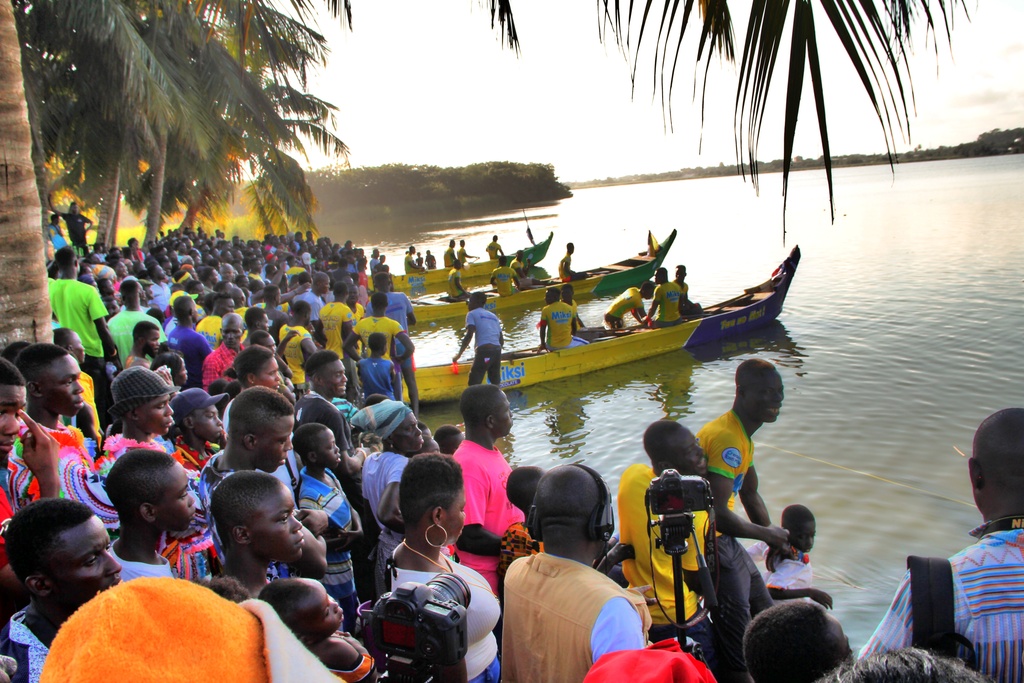
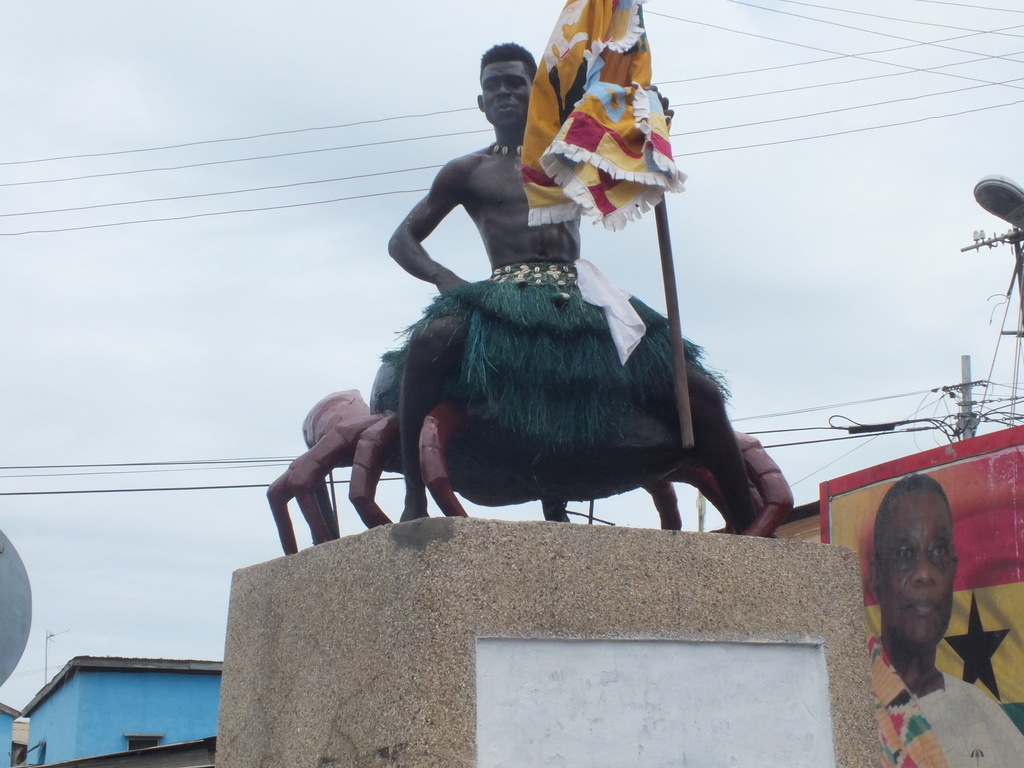
The Asafo companies on the water. These are the traditional military companies of Oguaa, each with its own flags, colours, drums and centuries of rivalry — and understanding them is the key to understanding the whole town.
The lagoon opening. The ritual that permits fishing to resume in the sacred waters — the moment the festival’s religious purpose becomes visible, and the canoe race that follows it.
Free community health screening. Not a visitor event, and worth knowing about mainly because it shows what a traditional council actually does with its festival week.
The queenmothers’ cooking competition. Local, competitive, and the best food you will encounter all week.
With the President of the Republic and royal guests. Cape Coast Castle stands in this town, and this is the day the festival addresses it directly.
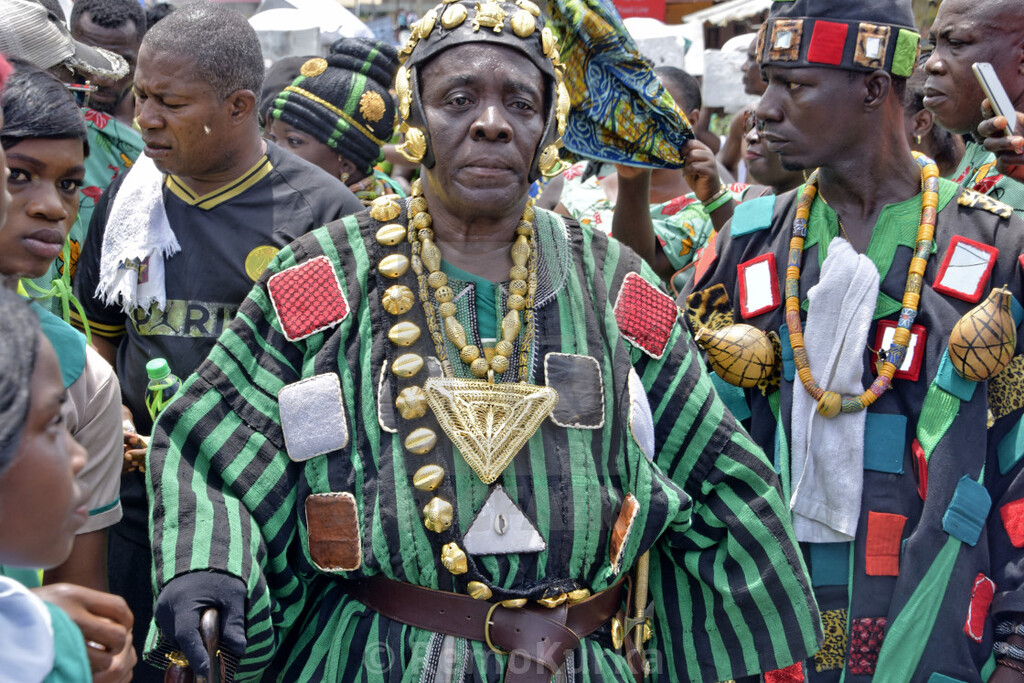
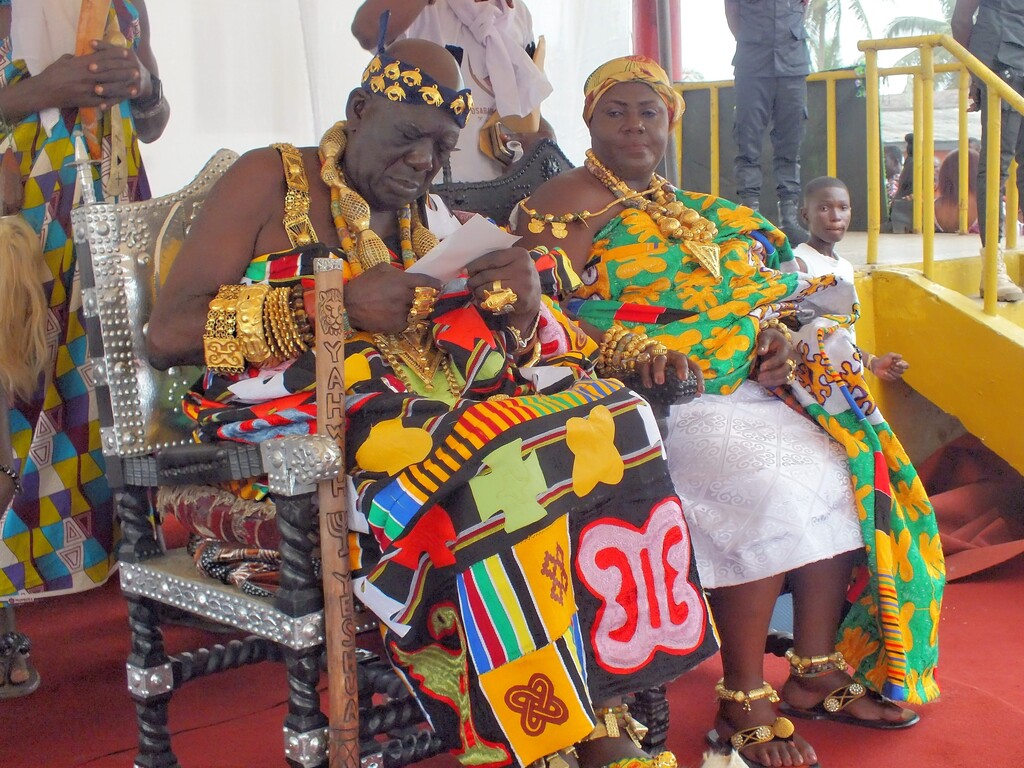
The Omanhene of Oguaa and his council in full regalia. Traditional authority made visible — and the framework that governs everything else in the programme.
The cleansing of the state. This is what Fetu Afahye means — purification of the town, its people and its gods. The colonial administration once banned this festival outright, and the sacred silence that precedes the purification is part of why.
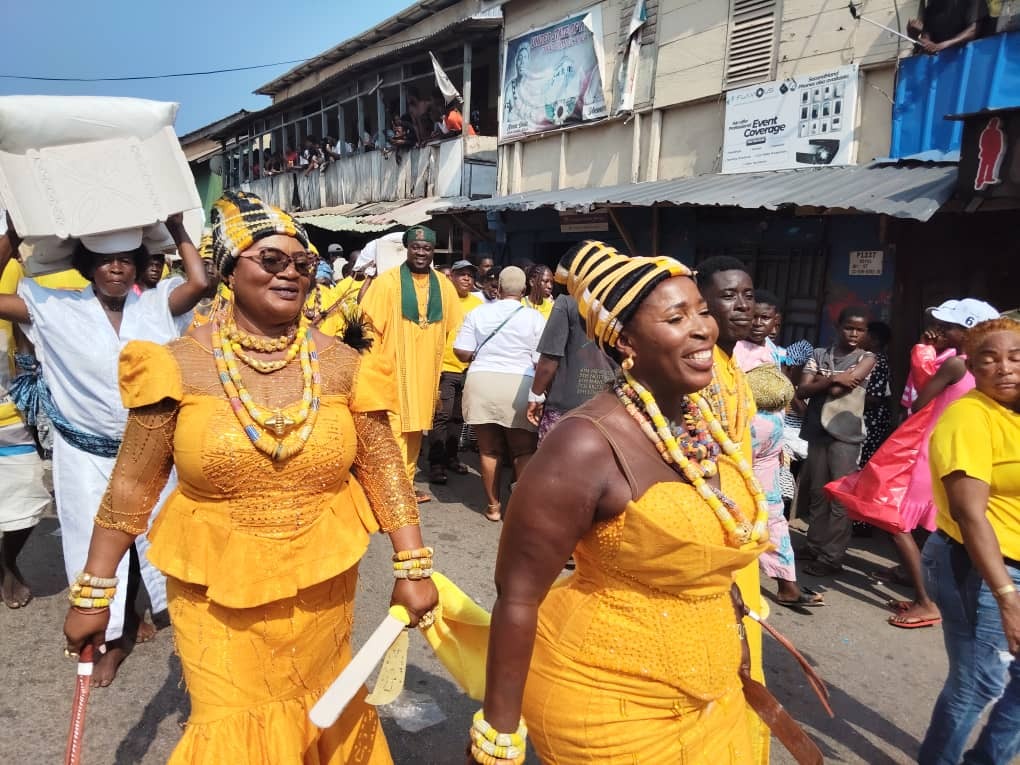
The modern face of the festival. The whole town in orange, and the day that has done most to carry Fetu Afahye to a younger and wider audience. Wear orange or stand out.
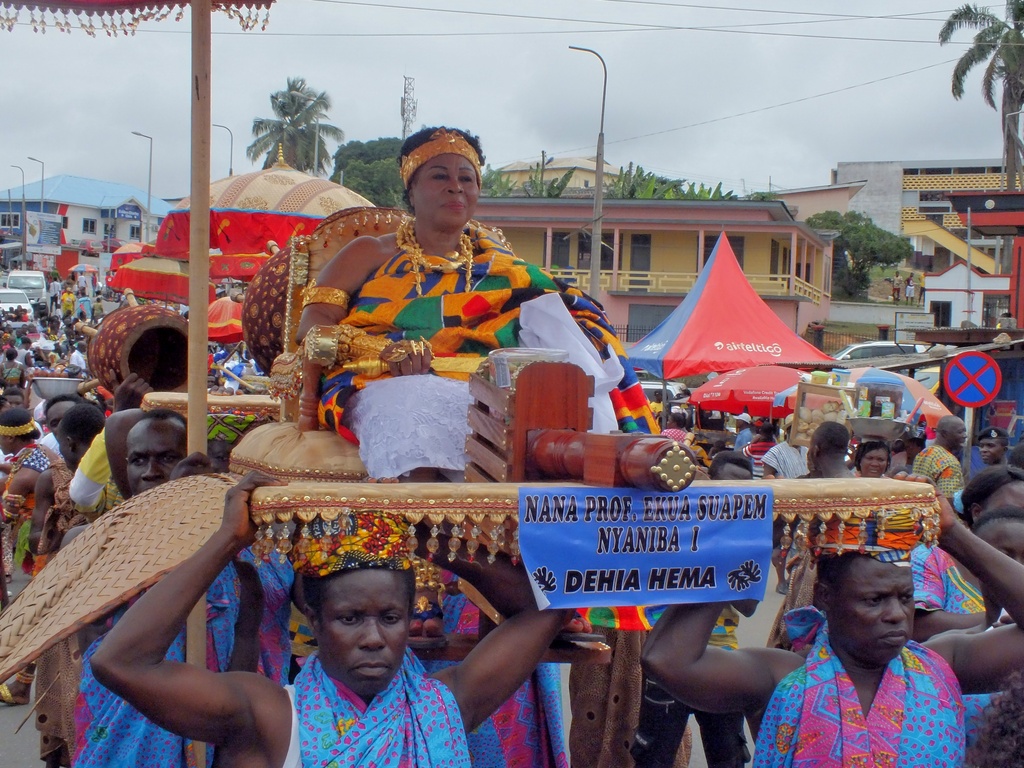
The day everybody comes for. Chiefs in palanquins, the Asafo companies in full colours, drumming, and the Omanhene receiving the state. If you attend one day of Fetu Afahye, attend this one — and get there early, because Victoria Park fills.
Ebusua Dwarfs at home. Cape Coast takes its football roughly as seriously as its traditions, and the Afahye Cup closes the week.
Before you go. Accommodation in Cape Coast sells out for Fetu Afahye and prices rise sharply. Book well ahead, and read the travel and accommodation guidance rather than arriving hopeful.
Photography. The carnival, the regatta, Orange Friday and the durbar are public and photographed constantly. Akom’s Night and the Oman Purification are religious observances — ask, and accept a refusal.
Dates. This programme is as published by the Oguaa Traditional Council for the 62nd anniversary. Festival programmes in Ghana move; confirm locally before booking travel around a specific day.
MONDAY — 31 AUGUST 2026

his is the true spiritual opening of the festival.
Chief priests gather at the lagoon
Ritual dancing begins
Invocations to the gods
Lagoon is spiritually “opened”
Community energy rises
This is the moment the festival truly begins.
TUESDAY — 1 SEPTEMBER 2026

This is one of the most important ritual days.
Libation poured for the gods
Canoe race (Regatta)
Lagoon officially opened
After the race → lagoon fully opened for the community
Fishermen catch symbolic fish
Amount of fish = omen for the year
Fish presented to the chief of Cape Coast
WEDNESDAY — 2 SEPTEMBER 2026

This day has three major cultural elements:
Families with twins gather
Blessings for twins
Cultural honouring of twin spirits
A cow is taken from the market
Procession through town
Symbolic offering connected to ancestral rites
THURSDAY — 3 SEPTEMBER 2026

This is a deep cultural night.
Priests gather at the town centre
Local gods honoured
Drumming and dancing until morning
Community participation
Spiritual cleansing
This is one of the most visually powerful nights.
FRIDAY — 4 SEPTEMBER 2026
This is a sacred rite:
Cow head is cut
Blood sprinkled on shrines
Gods honoured and “fed”
Protection for the community
FRIDAY — 4 SEPTEMBER 2026

Cape Coast turns orange — clothing, decorations, market stalls, street banners. It’s the day when:
youth groups gather
drumming begins in the neighborhoods
the city’s energy rises
This day is pure atmosphere.
SATURDAY — 5 SEPTEMBER 2026

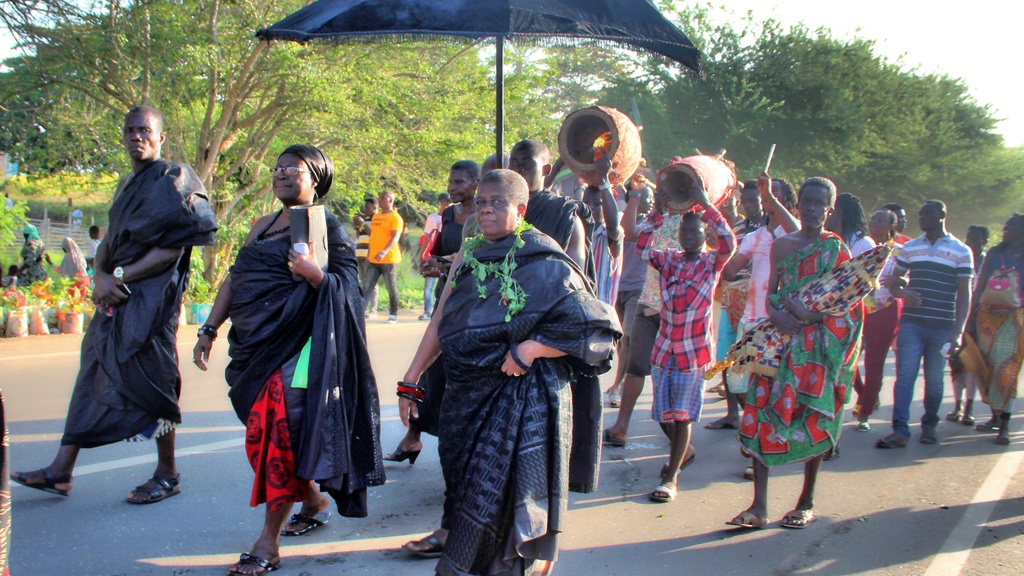
Saturday — chiefs, Asafo, dancers, crowds, full city in motion. With the full traditional + chieftaincy + Asafo procession
This is the BIG DAY:
grand durbar
chiefs in full regalia
Asafo companies marching
drumming and dancing return
crowds fill the streets
cultural displays everywhere
the city becomes a living museum
01. March 2017

Sunday: continuation of celebrations + joint Christian thanksgiving service.
A beautiful ending:
churches unite
thanksgiving service
prayers for the community
cultural and spiritual harmony
This shows the unity of tradition and a more modern faith, as christianity was prety unknown until 1600s.
The festival begins at dusk, when the chief priests gather at the sacred Fosu Lagoon.
Ritual dancing begins
Invocations to the gods
Lagoon is spiritually “opened”
Community energy rises
This moment marks the true spiritual opening of Fetu Afahye.
One of the most important ritual days.
Priests pour libation to honour the 77 gods of Oguaa.
Fishermen compete in a colourful canoe race on the lagoon. Crowds cheer as decorated boats glide across the water.
After the race, the lagoon is officially opened for the community.
Fishermen catch symbolic fish. The amount of fish is interpreted as an omen for the coming year. The fish are presented to the Omanhene.
Families with twins gather for blessings and cultural honouring.
A cow is taken from the market and led through town to Cape Coast Castle. This symbolic offering connects the festival to ancestral rites and the historical centre of Oguaa.
A deep cultural night of ancestral honouring.
Priests gather at the town centre
Local gods are honoured
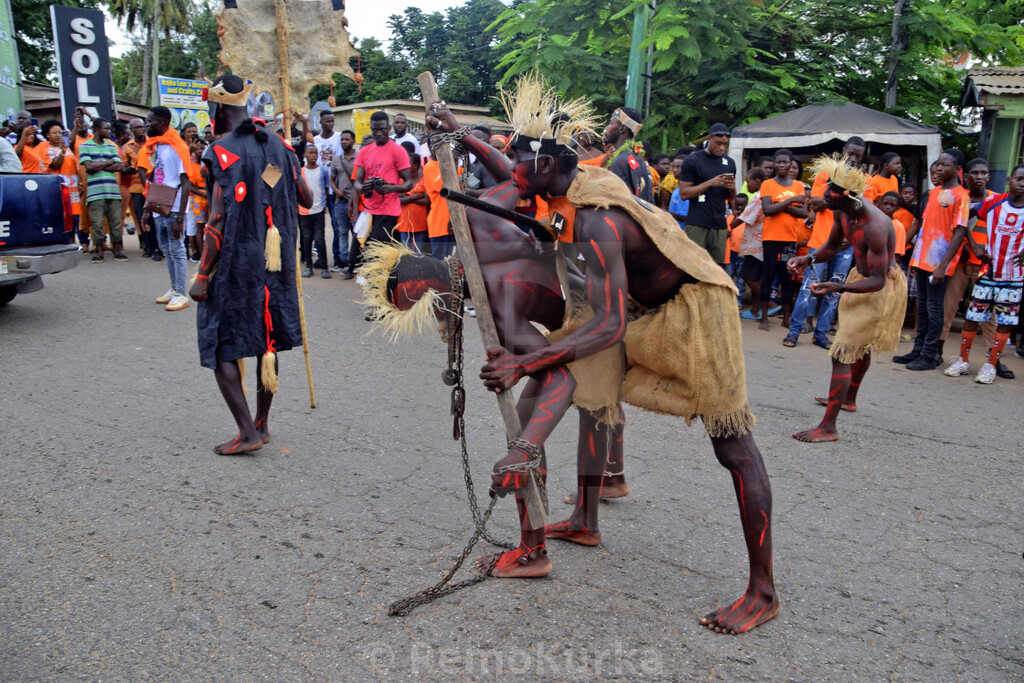
Drumming and dancing continue until morning
Community participation is strong
Spiritual cleansing takes place
This night is one of the most visually powerful parts of the festival.
A sacred rite performed by priests:
Cow head is cut
Blood sprinkled on shrines
Gods are “fed”
Protection for the community is invoked
Cape Coast transforms into a sea of orange.
Youth celebrations
Street parties
Drumming and dancing
Market stalls decorated
The city’s energy rises
Orange Friday is the modern heartbeat of the festival.
The first Saturday of September is the grand climax.
From Enfantepim Junction → Victoria Park, the city becomes a living museum.
Asafo companies march
Chiefs appear in full regalia
Drumming and dancing return
Cultural displays fill the streets
Thousands gather to celebrate
At Victoria Park:
Chiefs address the people
Cultural groups perform
Traditional authority meets community
The spirit of Oguaa is fully alive
This is the day most visitors come for — and your photos will be the centerpiece.
The festival ends with unity and gratitude.
Churches unite
Joint Christian thanksgiving service
Prayers for the community
Cultural and spiritual harmony
This peaceful closing reflects the blend of tradition and modern faith.
Although the public festival ends Sunday afternoon, the deep traditional rites continue:
Priests return to shrines
Final cleansing rituals
Ancestral invocations
Spiritual closing of the festival
These rites are not public — but they complete the festival cycle.